Years ago, I decided it was finally time to buy a matching set of dinner plates.
Nothing fancy. Just a set I had picked out myself.
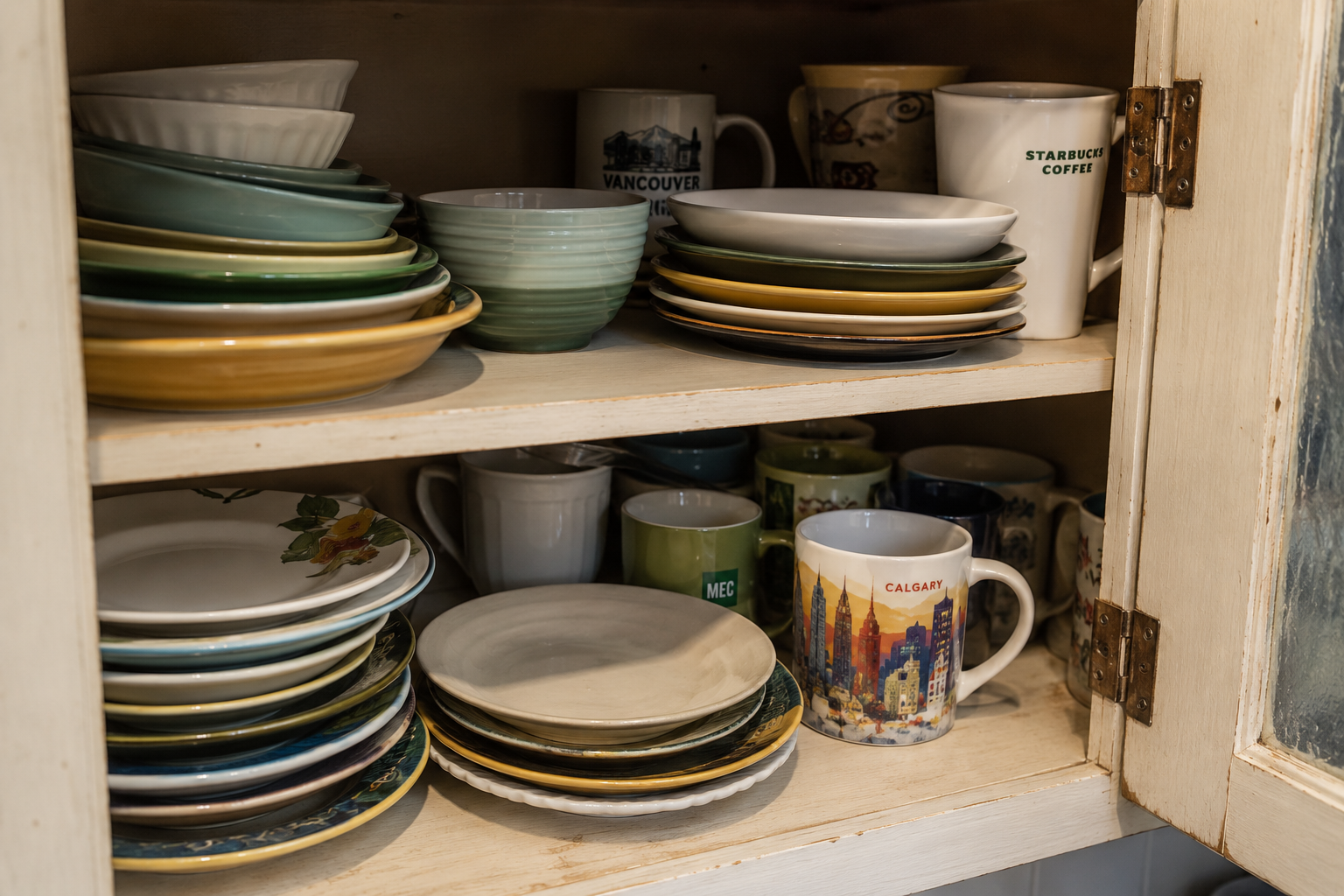
The plates I owned were leftovers from other people's kitchens. A few came from relatives. A few survived moves. Some had chips. None of them matched.
They still worked.
For a while, that was enough.
But every time I opened the cupboard, it looked like a collection instead of a choice.
And I knew that living today means not holding on to money so tightly that you can't enjoy the simple things — like having plates that feel like they belong to you.
So I started paying attention whenever I walked through stores.
Not shopping. Just looking.
Eventually I found them.
Plain white plates with a simple rippled edge. Nothing trendy. Nothing that would look dated. Easy to replace if one broke.
I wanted them.
It would have been easy to buy them that day. The old plates had seen better days. But I knew that store. They were always running sales. Every week a new flyer arrived, and something different was discounted. There was a good chance these plates would be too if I waited.
The plates I had still held dinner.
So I left the new ones on the shelf.
Whenever I tell myself I can wait, the decision changes.
Everything looks like a good buy when you're standing in the store.
At home, it usually looks different.
A few weeks later, the flyer arrived.
There they were.
The same white plates.
On sale.
I smiled. I'd waited, I still wanted them, and now the price had come down.
Saturday morning, I drove to the store, found the plates, and headed to the checkout.
"These aren't on sale," the cashier said.
"I'm pretty sure they are."
She checked again.
"No, not the white ones."
For a moment, I thought about buying them anyway. I was already there. The plates were in my cart. The difference wasn't much, and I could afford it.
That's how people often spend more than they planned — not because they need the item, but because they've already invested the time. Once you've driven to the store and found what you wanted, paying a little more feels easier than walking away.
But I had already made my decision.
I was willing to buy the plates at the sale price.
I wasn't willing to buy them at the regular price.
Those were two different decisions.
So I thanked the cashier and left the plates behind.
I was disappointed.
But the mismatched plates in my cupboard had lasted this long.
They could last a little longer.
Later that afternoon, I looked at the flyer again. It didn't say anything about the colour.
So I called the store and asked for the manager.
"You were right," he said after checking. "The white ones are included."
It was Saturday. I wasn't doing anything else, and the store was only a few minutes away.
So I went back.
This time they rang up at the sale price.
The savings weren't life changing.
Neither was the extra trip.
Sometimes we spend more just to avoid a small inconvenience.
For me, one more quick stop was worth keeping a little more money in my pocket.
Looking back, the lesson wasn't waiting for a sale.
The lesson was giving the decision time.
If the plates had never gone on sale, I might have bought them anyway.
But by waiting, I knew I was buying them because I wanted them — not because I happened to be standing in the aisle.
Living today means choosing small things that make your everyday life feel like your own.
Not luxury. Not perfection. Just intention.
Protecting tomorrow means giving those choices space — enough space to think, to wait, and to make sure the purchase is a decision, not a reaction.
Every payday gives us options.
Most of them don't need to be decided immediately.
Sometimes the smartest financial decision — and the simplest way to enjoy your life — is to wait until the choice feels true.
Patience costs nothing.
But it often buys the life you actually want.