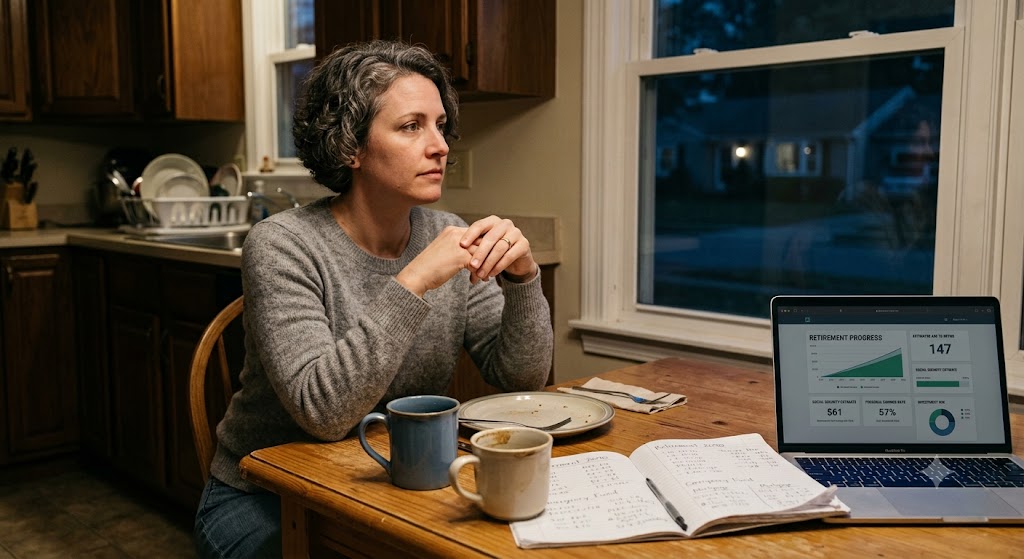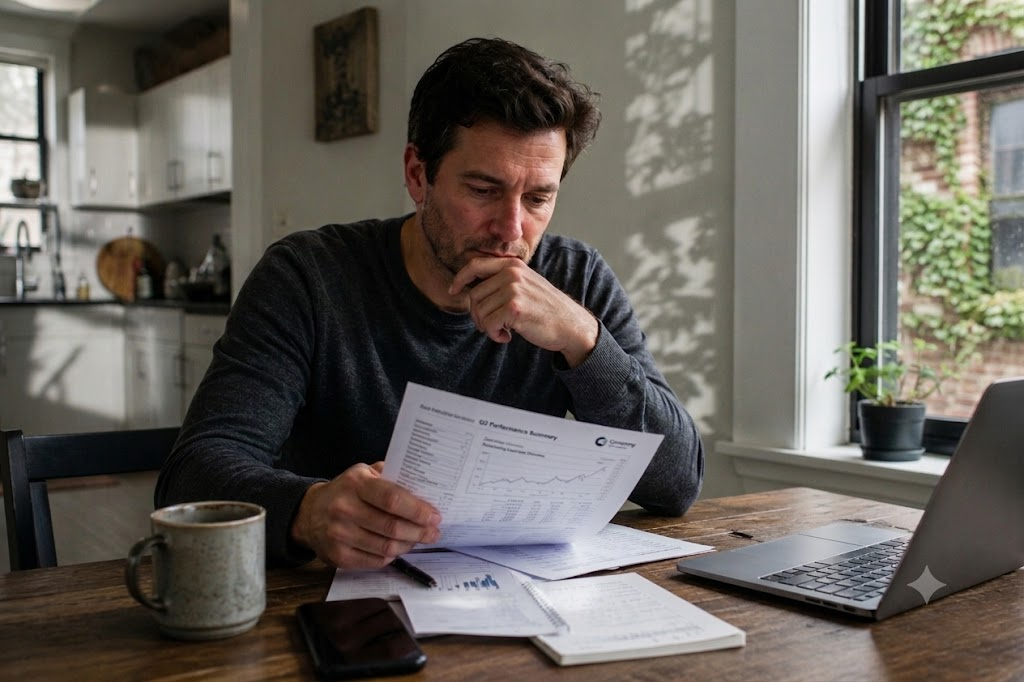
The hard part
The hardest part of investing is not getting started.
It's continuing when it feels like nothing is happening.
Compound interest is usually explained with a chart.
Your money earns a return.
That return stays invested.
Then it begins earning money too.
Given enough time, your investments may eventually earn more in a year than you contribute.
That's the exciting part.
What people rarely talk about are the years before that happens.
The years when you keep investing, open your account, and wonder if any of it is making a difference.
In the beginning, you do most of the work
Early on, most of your growth comes from your own contributions.
Imagine you invest $2,000 over the course of a year and your account earns $100.
The following year, you invest another $2,000, but the market falls.
Your balance may barely change even though you kept doing everything right.
That can feel frustrating.
Not because the plan stopped working.
Because the account is still too small for compound growth to stand out.
A 6 percent return on $5,000 is only $300.
The same return on $100,000 is $6,000.
The percentage never changed.
The balance did.
Before your investments can do more of the work, you have to build something worth compounding.
Those quiet years were never wasted.They were building the foundation.
Boring is usually a good sign
There isn't much excitement in long term investing.
You contribute.
You buy the investment.
Then you leave it alone.
You repeat that over and over.
There are no dramatic moves.
No perfect timing.
No exciting story to tell.
It almost feels too ordinary to matter.
But that's exactly how many large investment accounts are built.
The results show up years after the habit is established.
Markets will test your patience
Compound interest is often shown as a smooth curve.
Real life looks nothing like that.
Markets rise.
Markets fall.
Sometimes your account grows quickly.
Sometimes it gives back months of gains.
That doesn't mean the plan failed.
It means investing has never moved in a straight line.
This is also why money you'll need in the next few years shouldn't be invested as though time will solve every problem.
Investments need time to grow.
Sometimes they also need time to recover.
Doing less is often the harder choice
When markets become unpredictable, it's easy to feel like you should be doing something.
Changing investments.
Reading predictions.
Moving money around.
But activity and progress are not the same thing.
Sometimes the best decision is to keep following the plan you already made.
Keep contributing.
Keep costs low.
Keep enough cash set aside that you won't be forced to sell investments when life gets expensive.
Your investments may change every day.
Your plan doesn't have to.
One day the math changes
For years, your contributions may account for most of your growth.
Then something interesting happens.
Your investments earn $1,000.
Later they earn $3,000.
Then maybe $8,000.
Eventually there may be a year when your account earns more than you contributed.
Nothing magical happened.
You simply reached the point where your balance became large enough for compound growth to become noticeable.
Those quiet years were never wasted.
They were building the foundation.
Don't underestimate the quiet years
The early years are the least exciting part of investing.
They're also the most important.
This is where you build the habit.
This is where you learn not to panic during market declines.
This is where you prove to yourself that consistency matters more than excitement.
One day you'll probably look back and realize the hardest part wasn't choosing an investment.
It was believing in the process before the results were obvious.
Until then, slow progress is still progress.
Every payday is a decision.
Choose yours.