A promise on paper
I never expected $100 to teach me one of the most valuable financial lessons of my life.
It wasn't an investment that went wrong.
It wasn't an expensive purchase I regretted.
It was a loan.
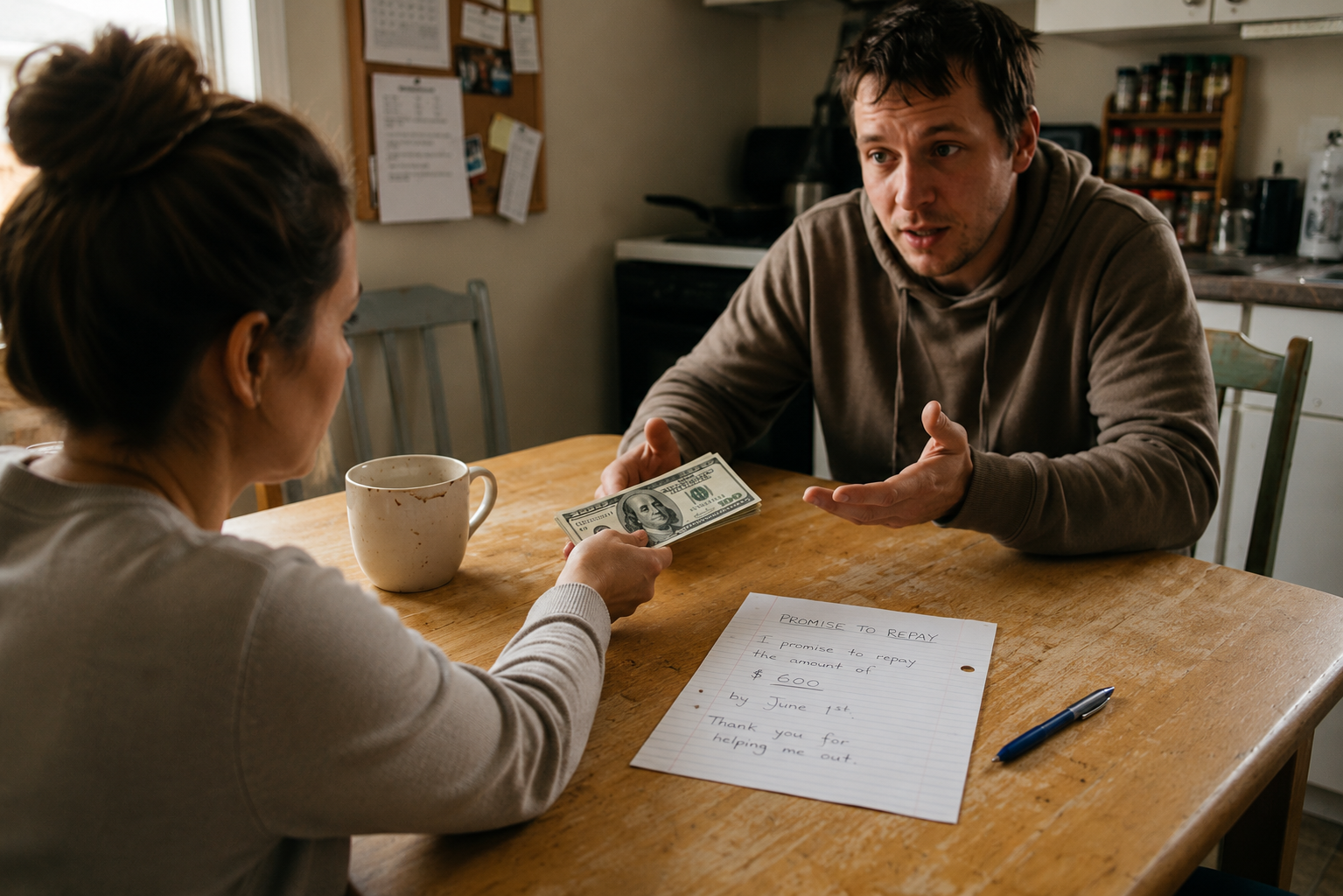
Someone I knew asked if they could borrow $100.
They promised they would pay me back.
To make the arrangement feel official, they suggested writing a promissory note.
We both signed it.
I remember thinking the promissory note changed everything.
Surely someone willing to put a promise in writing intended to keep it.
The money was gone
Weeks passed.
Then months.
Whenever I asked about the money, there was another excuse.
Eventually, the excuses stopped.
When I brought up the promissory note, the answer surprised me.
"It isn't legally enforceable anyway."
That was the end of the conversation.
The money was gone.
Later, I found out it had been used to go to a party.
I wasn't angry because of the money.
I was angry because someone had asked for help, made a promise, and then decided that promise no longer mattered.
Treat a personal loan like a gift.Only give what you can afford never to receive again.
The rule I never forgot
Years later, I realized the experience had given me a rule I would never forget.
When you lend money to a friend or family member, there is always a chance you will not get it back.
A promise does not remove that risk.
Neither does a piece of paper.
Circumstances change.
Priorities change.
Sometimes people simply choose not to repay what they owe.
That is why I now treat a personal loan like a gift from the moment I hand over the money.
If it comes back, I am grateful.
If it does not, I have already accepted the loss.
That does not mean I lend money freely.
It means I never lend money I still need for my own future.
What could that $100 have become?
For a long time, I focused on what the other person had done with the money.
Eventually, I started asking a more useful question.
"What could that $100 have done for me?"
It could have paid for something I genuinely valued.
It could have covered an unexpected bill.
It could have gone into savings.
It could have started growing inside an investment account.
It could have become part of my future instead of someone else's night out.
One hundred dollars may not feel significant.
But small amounts rarely reveal their value immediately.
Their power comes from repetition.
One hundred dollars saved today.
Another hundred next month.
Another after that.
Over time, ordinary amounts can become something much larger.
A lesson worth more than the money
For years, I thought I had lost $100.
In reality, I had paid $100 for a lesson that has saved me far more since.
Now, when someone asks to borrow money, I do not begin by asking whether I trust them to repay it.
I ask whether losing the money would damage my own plans.
If the answer is yes, I say no.
If the answer is no, I may lend it or give it freely, knowing I may never receive it again.
That question has protected my finances, my relationships, and my peace.
A promissory note could not guarantee that I would be repaid.
A clear boundary could guarantee that I would not give away money I needed for my own future.
Every payday asks a question.
"Will this decision strengthen my future or weaken it?"
That is the question the $100 taught me to ask.
Every payday is a decision.
Choose yours.