The cash drawer lesson
One of my first jobs was working as a cashier.
Every morning before the store opened, we'd head downstairs to collect the cash for our register.
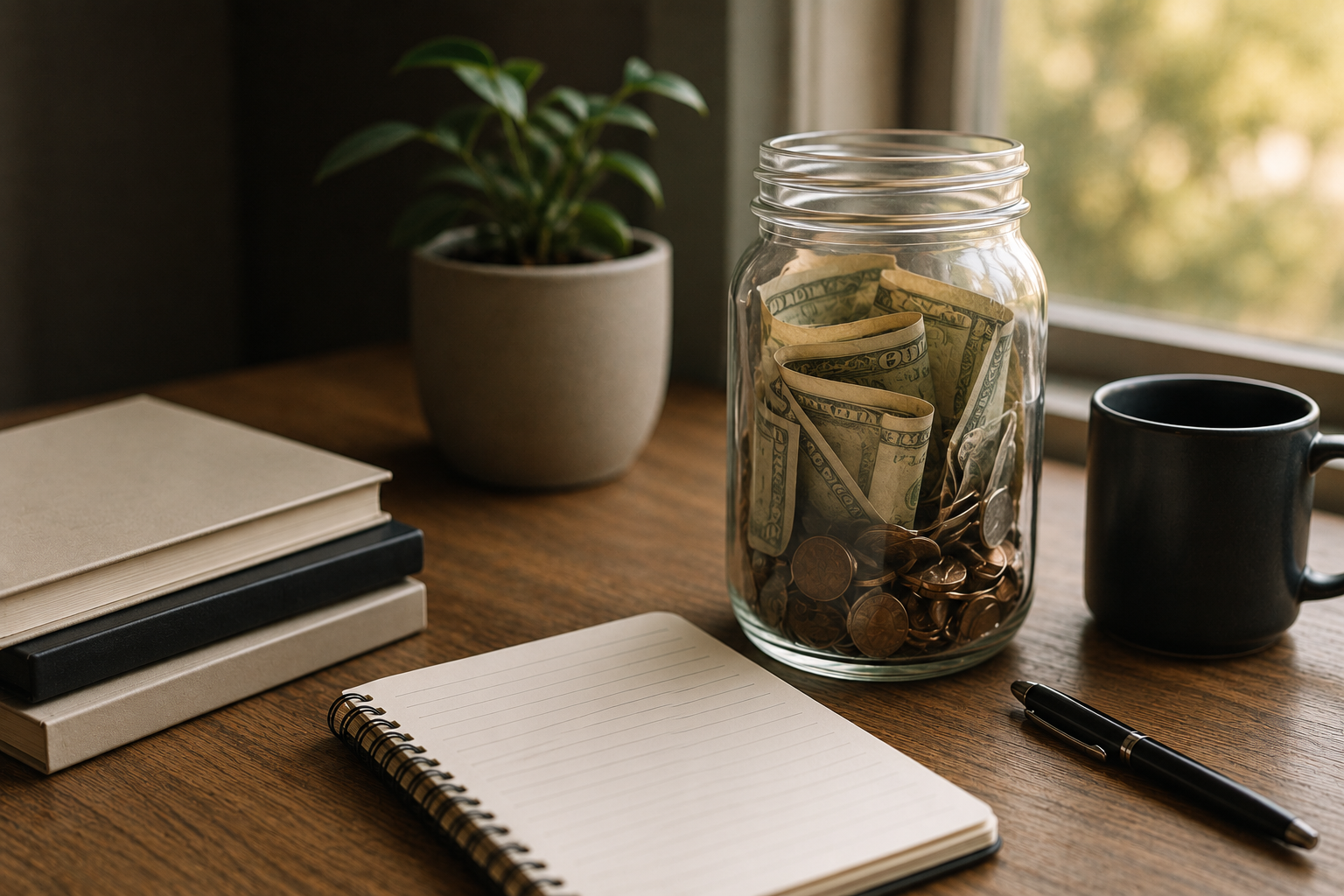
Inside every cash drawer was something called a float.
It wasn't there to spend.
It wasn't profit.
It had one job:
To make sure we could make change throughout the day.
As customers came and went, money constantly moved in and out of the drawer. At the end of every shift, we counted everything. The sales had to match. The cash had to match. And the float had to still be there.
If the float was short, something had gone wrong.
It wasn't meant to disappear.
It was meant to be ready for tomorrow morning.
Years later, I realized our personal finances aren't much different.
Your life needs a float
Every payday, money arrives.
Bills get paid.
Groceries get bought.
The mortgage comes out.
The phone bill is due.
Life keeps moving.
But life has something stores don't:
Unexpected expenses.
The furnace stops working.
Your car needs a repair.
The dog gets sick.
You lose your job.
The washing machine quits.
Emergencies never check your calendar.
They simply show up.
That's why every household needs a float.
We usually call it an emergency fund.
I still like the word float because that's exactly what it is.
A float isn't money waiting to be spent.It's money waiting to protect you.
The money waiting to protect you
One of the biggest mistakes people make is looking at an emergency fund and thinking,
"I have all that money sitting there doing nothing."
That's exactly the wrong way to see it.
A float isn't money waiting to be spent.
It's money waiting to protect you.
The cash drawer at work wasn't considered wasted because it wasn't used every minute of the day. Its value came from being there when it was needed.
Your emergency fund works the same way.
Most days, nothing happens, and that's the goal.
But when life surprises you, your float quietly steps in and does the job it was created to do.
Who do you turn to?
Imagine your transmission fails tomorrow.
Or your furnace quits in the middle of winter.
If you have a float, the problem is expensive.
If you don't, the problem becomes something much bigger.
Now you're trying to borrow money.
Maybe from family.
Maybe from friends.
Maybe from the bank.
Maybe from a credit card.
The emergency hasn't changed.
Only the way you have to deal with it has.
A float gives you options.
It gives you breathing room.
Most importantly, it lets you solve one problem without creating another.
Build it one payday at a time
People often think they need thousands of dollars before starting an emergency fund.
You don't.
You simply need to begin.
Maybe it's twenty-five dollars from this payday.
Maybe it's fifty.
Maybe it's one hundred.
The amount matters far less than the habit.
Every payday adds another layer of protection.
Over time, that protection becomes confidence.
Eventually, something interesting happens.
You stop worrying quite as much.
Not because emergencies stop happening.
Because you know you're ready when they do.
The best money you never spend
The best emergency fund is the one you rarely touch.
Not because it isn't useful.
Because its greatest value comes from quietly waiting in the background.
Just like the float in a cash drawer.
Always there.
Always ready.
Hopefully, never needed.
And if one day you do need it, you'll be grateful you built it one payday at a time.
Money with a purpose
At 1040 Paydays, we believe every payday has a purpose.
Some dollars pay today's bills.
Some dollars build tomorrow's retirement.
And some dollars simply wait, not because they're forgotten, but because they're protecting everything else you've worked so hard to build.
Most of us only receive about 1,040 paydays during our working lives.
Use a few of them to build your float.
One day, you'll be thankful it's there.
Because every payday funds a future.
Choose yours.